
From Setback to Comeback: A Framework for Financial Recovery After Major Life Changes
Life can throw unexpected curveballs, and the way people respond often determines whether they recover financially and emotionally. Major life changes, such as divorce, widowhood, job loss, serious medical issues, or natural disasters, can have a traumatic and lasting impact on financial well-being.
For organizations that serve individuals facing these transitions, there is an opportunity to provide structured, practical, and supportive financial education. Your organization can empower participants to rebuild their financial foundations, regain confidence, and secure long-term stability.
Rebuilding Your Financial Foundation After A Major Life Change
Understanding the Financial Pain Points
Overcoming Financial Pain Points
Designing Programs That Empower Action
2: Conduct a Financial Snapshot
5: Identify and Reduce Expenses
7: Establish Financial Management Systems
9: Update Estate Plans and Beneficiaries
10: Access Professional Financial Guidance
Program Outcomes: From Setback to Comeback
The Bottom Line: Organizational Takeaways
1) FOR ORGANIZATIONS: See Our Transformation Roadmap Framework in Action
2) FOR LIBRARIES: The Librarian's Toolkit: Turning The Page to Teen Financial Empowerment
Understanding the Financial Pain Points
In programs designed for individuals navigating major life changes, participants commonly report:
Overwhelm from uncertainty and financial complexity
Fear of making mistakes in budgeting, saving, or managing debt
Lack of clarity about long-term financial goals
Anxiety over protecting assets, insurance, and legal considerations
These challenges aren't just emotional; they directly affect the participants' ability to achieve stability and engage in life-affirming decisions, from career changes to housing.
But with the right instruction, inspiration, and motivation, your participants can be empowered to gain the strength, confidence, personal growth, direction, and resiliency they need for their financial transformation, and ultimately, their comeback.
For organizations, recognizing these pain points is the first step toward program design that meets participants where they are, turning uncertainty into actionable steps.
Recently, I was asked to design and deliver a financial education program for those experiencing major life changes, specifically divorce or widowhood. Before the design of the program, we surveyed to understand the participants' most pressing needs. From the survey, we were able to understand some of the financial pain points experienced by the participants.


Overcoming Financial Pain Points
We designed our program to incorporate relief and solutions for the pain points reported by the participants. Our goal was to design a program with a curriculum that enabled the participants to take immediate action to relieve their financial pain points.

Designing Programs That Empower Action
Effective financial education for this audience requires much more than the delivery of information. Programs should focus on practical, immediately actionable skills that participants can implement to regain control. Organizations can structure learning around ten key steps:

1: Assess Financial Mindset
Help participants identify emotions impacting financial decisions: stress, grief, and anxiety.
Encourage reflective exercises to separate emotions from decision-making.
Guide participants to slow down when urgent decisions arise, and connect them with professionals when needed.
2: Conduct a Financial Snapshot
Teach participants to create a 'financial snapshot' capturing assets, liabilities, income, and expenses
This becomes the starting point for actionable financial planning

3: Set New Financial Goals
Assist participants in aligning goals with their new reality.
Encourage SMART goals (Specific, Measurable, Achievable, Relevant, Time-Bound).
Include short- and long-term objectives, from debt reduction to housing, savings, and credit repair.
4: Develop a Realistic Budget
Guide participants to prioritize essential expenses first.
Incorporate strategies for debt repayment and savings allocation.
Use budgeting as a roadmap for rebuilding financial stability.
5: Identify and Reduce Expenses
Teach participants to categorize fixed, variable, and periodic expenses.
Provide strategies for negotiation, cost reduction, and smarter spending.
6: Establish a Savings Plan
Introduce emergency funds. Have them start an emergency fund as a cushion to absorb any unexpected financial curveballs. The goal is to set aside 3-6 months' worth of living expenses in a separate account that they don't touch for any non-emergency event.
Guide participants to set up automatic savings for short- and long-term goals, like a home purchase or education.
Emphasize the regular review and adjustment of the savings plan.

7: Establish Financial Management Systems
Promote consistent money management through budgeting tools, apps, and automated systems.
Encourage tracking and accountability to maintain progress toward goals.
8: Manage Debt Strategically
Support participants in identifying all outstanding debts and interest rates.
Teach repayment strategies such as debt snowball or debt avalanche.
Show ways to negotiate interest rates and integrate repayment into the budget.
9: Update Estate Plans and Beneficiaries
Encourage review of wills, powers of attorney, healthcare proxies, and account beneficiaries.
Help participants understand the importance of legal safeguards in protecting their financial future.
10: Access Professional Financial Guidance
Connect participants to qualified financial advisors, tax professionals, and insurance experts.
Help organizations design referral networks to ensure participants have access to comprehensive, personalized support.

Program Outcomes: From Setback to Comeback
Organizations that implement structured financial education see measurable benefits:
Participants gain clarity and confidence in their financial decisions
Behavioral change occurs when participants take decisive steps toward stability
Long-term outcomes improve, including savings, debt management, and asset protection
Programs that address both emotional resilience and financial skills empower individuals to transform uncertainty into action, turning setbacks into long-term financial comebacks.
The Bottom Line: Organizational Takeaways
For organizations serving populations experiencing major life changes:
Financial education is not just knowledge transfer; it's a tool for empowerment.
Integration with emotional support and professional resources maximizes impact.
Timing and context matter: programs aligned with transitional moments produce stronger engagement and outcomes.
Behavioral application drives success: teaching participants how to act on what they learn is more effective than delivering information.
By designing programs that focus on practical skills, actionable steps, and ongoing support, organizations can help participants rebuild their financial foundation and create stability, confidence, and opportunity after major life changes.
Request our free case study video training based on the Rebuilding Your Financial Foundations After a Traumatic Loss program.
FREE RESOURCES:
1) FOR ORGANIZATIONS: See Our Transformation Roadmap Framework in Action
Organizations often ask what structured financial literacy programming looks like in practice. To support implementation, I’ve created a free case study video.
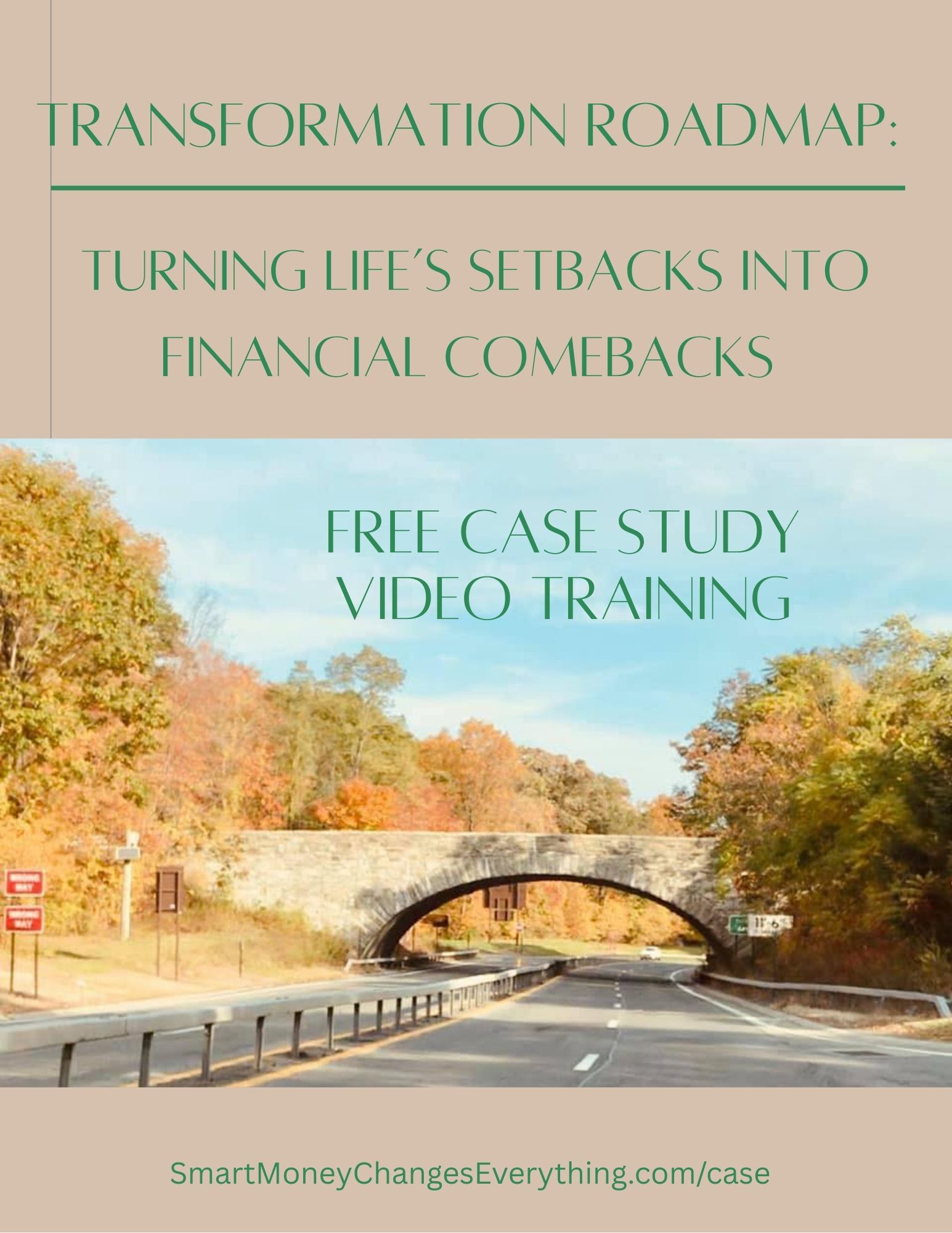
This free case study video walks you through a real-world framework used with a community organization.
Discover:
How our proven 3-step framework creates lasting results
Real participant turning points as they moved from fear to confidence and action
The measurable impact organizations can achieve with the right financial literacy programming
How we can customize the program and outcomes to fit your community's unique needs
The data-driven measurements of your program impact that you can share with your stakeholders to scale your program
Request Access to the Free Case Study Video here or from the QR Code below

2) FOR LIBRARIES: The Librarian's Toolkit: Turning The Page to Teen Financial Empowerment
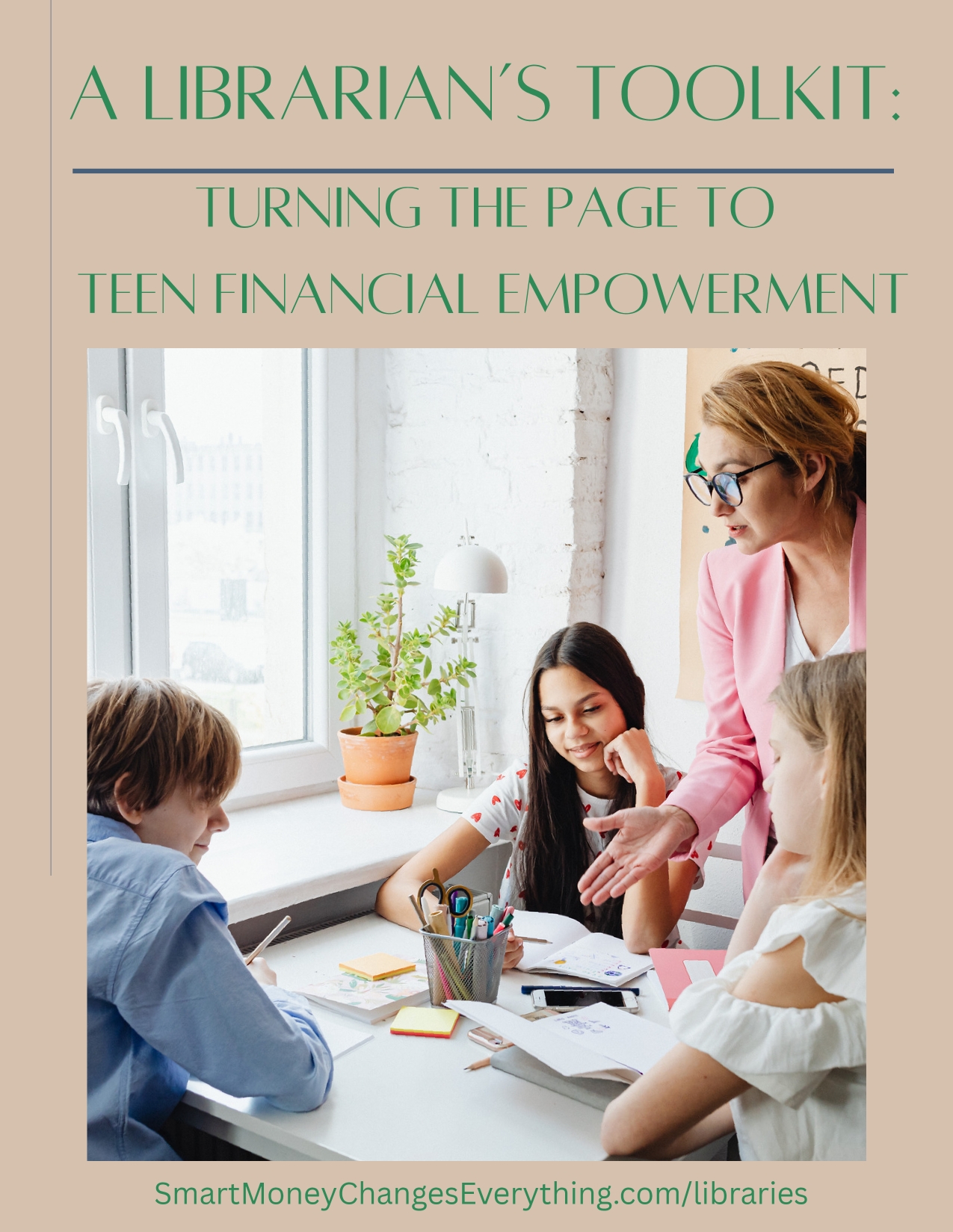
Teens will face significant financial choices sooner than they realize and often without the proper education or guidance.
Libraries are uniquely positioned to bridge that gap. Librarians have a powerful role in guiding young people toward life long learning.
To support implementation of teen financial literacy programs in libraries, I’ve created a free Librarian's Toolkit.
Discover in the toolkit:
Why financial literacy matters for teens, the important role of librarians, and the benefits for your library in offering this programming to your teens
Teen engagement tools to boost program turnout
A Teen Personal Finance Reading Challenge and Tracker
Request Your Free Librarian's Toolkit here or from the QR code below

Smart Money Changes Everything is strictly a financial education website. The information presented in this post is solely for your general financial education and is not to be considered financial advice. Always check with your trusted financial professional team who will consider your unique situation and goals to develop your own personalized comprehensive financial plan.

