Financial Instability Is a Public Health Emergency Why Financial Education Must Be Part of the Solution
Financial illiteracy is one of the most urgent social and economic challenges of our time. In our increasingly complex economy, the lack of financial literacy and financial capability has become a structural driver of financial instability. Its impact extends far beyond individuals, affecting families, communities, workforce systems, healthcare costs, and the broader economy.
Without foundational financial education, individuals lack the knowledge, skills, behaviors, and systems required to make informed money decisions. Poor financial decision-making contributes to chronic stress, mounting debt, inadequate savings, and long-term economic insecurity. Over time, this financial instability affects every aspect of well-being, including emotional and physical wellness, productivity, and family stability.
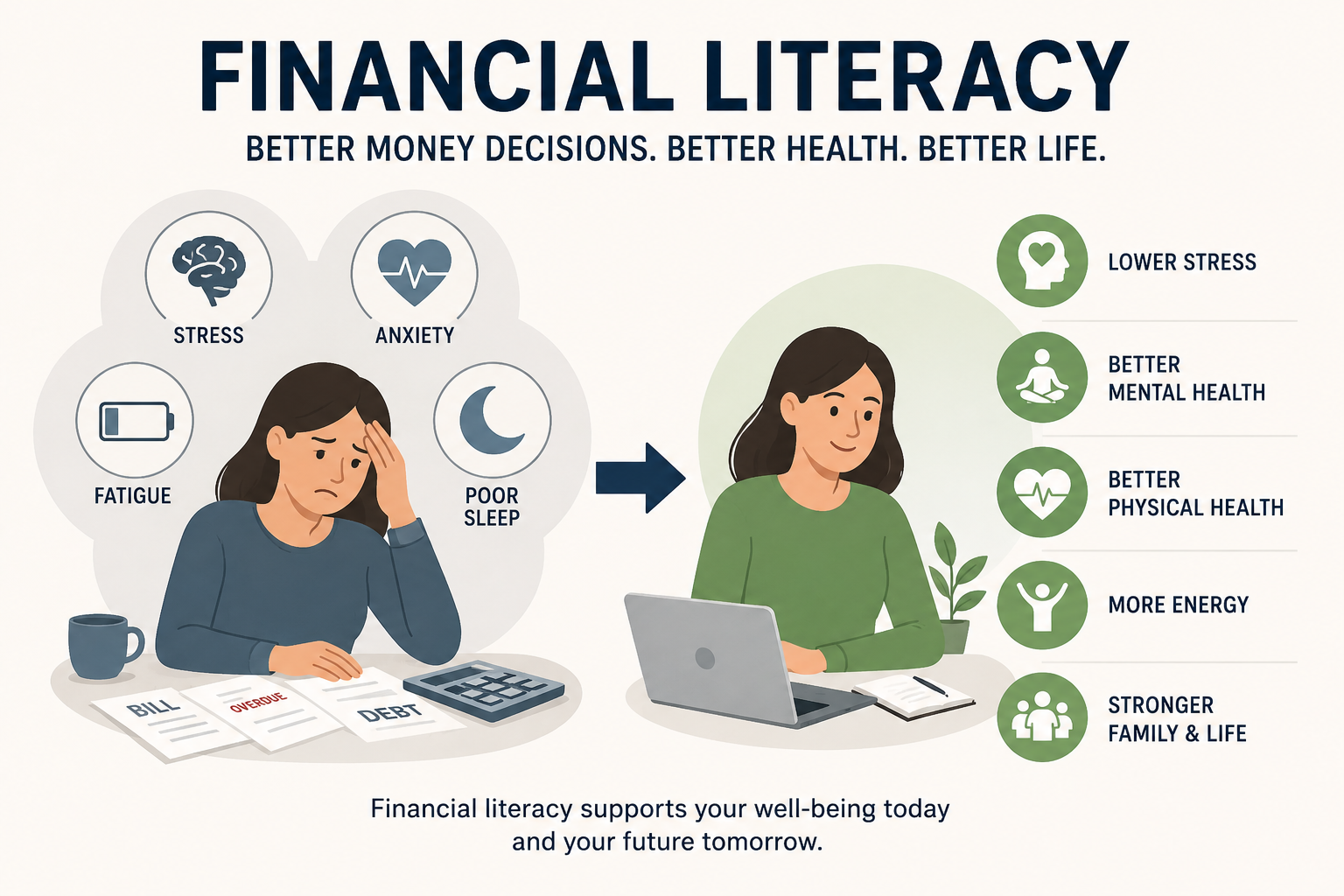
The societal cost of financial instability is substantial. Economic distress is closely linked to delayed preventative care, medication nonadherence, anxiety, depression, rising suicide rates, worsening chronic disease, and increased mortality risk. It also contributes to workforce disruption, educational inequity, housing instability, and intergenerational poverty.
Financial instability is not merely a personal budgeting issue; it is a public health crisis with measurable consequences for health outcomes, economic mobility, and community resilience.
The National Financial Educators Council (NFEC) is advocating for financial instability to be recognized as a Public Health Emergency (PHE). Such recognition would unlock the urgency, sustainable funding mechanisms, cross-sector collaboration, and infrastructure necessary to integrate financial capability services into public health strategy.
For policymakers, healthcare leaders, educational institutions, nonprofits, and workforce systems, the question is no longer whether financial capability services matter; it is how quickly they can be integrated into health, education, and economic development systems to reduce financial stress and improve long-term health outcomes.
Financial Instability Is a Public Health Emergency - Why Financial Education Must Be Part of the Solution
CDC's Five Social Determinants of Health (SDOH): A Clear Framework
2) Education Access and Quality
3) Health Care Access and Quality
4) Neighborhood and Built Environment
5) Social and Community Context
Financial Instability Impacts All Five Determinants
Financial Literacy as Preventive Public Health Strategy
The Policy Case for Declaring Financial Instability a Public Health Emergency
A Systems-Level Framework for Organizational Action
1. Early Financial Education in Schools
2. Financial Counseling for Adults in Crisis
4. Evidence-Based Financial Education Policy
CDC's Five Social Determinants of Health (SDOH): A Clear Framework
To fully understand why financial instability constitutes a public health crisis, it must be looked at through the lens of the Social Determinants of Health (SDOH).
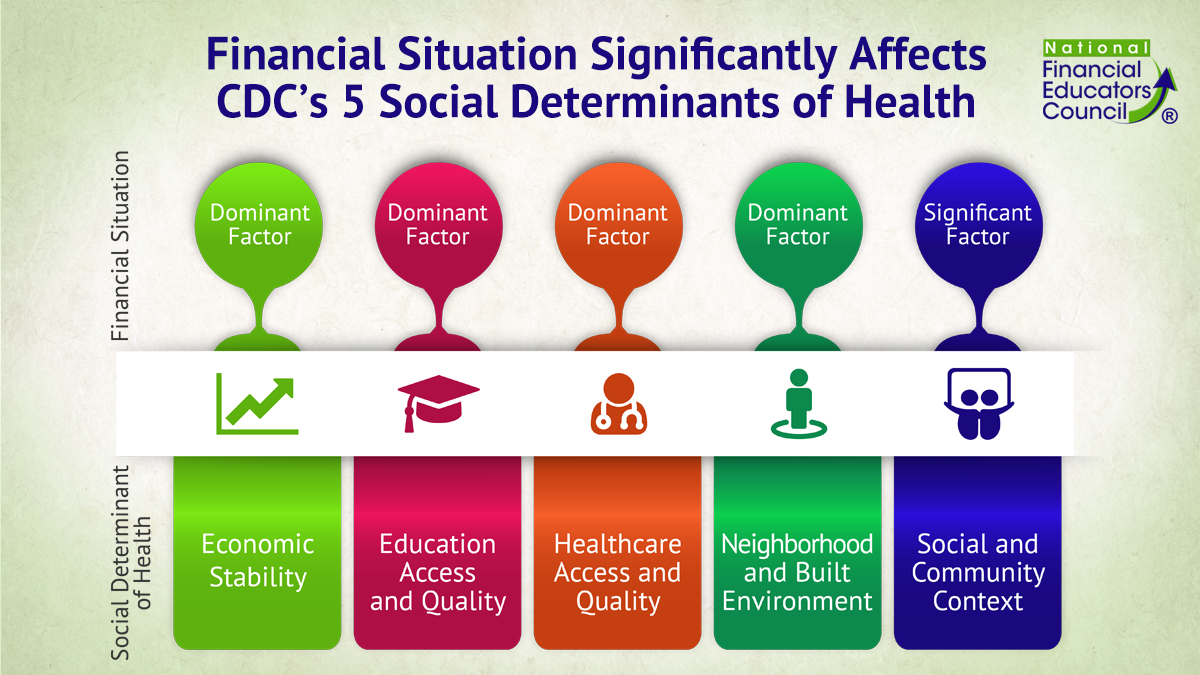
The Centers for Disease Control and Prevention (CDC) identifies five core Social Determinants of Health (SDOH): conditions in the environments where people are born, live, learn, work, and age that affect health outcomes. Financial capability and economic security sit at the core of these determinants, as shown in the chart below from the National Financial Educators Council, directly influencing health outcomes.
1) Economic Stability
This determinant includes:
Employment
Income
Debt
Expenses
Housing stability
Financial instability is directly embedded in this category. Income volatility, high-interest debt, lack of emergency savings, and housing insecurity are strongly correlated with poor physical and mental health outcomes.
Financial capability services are preventive interventions within this determinant.
2) Education Access and Quality
This includes:
Early childhood education
K–12 education
Higher education access
Skill development
Access to quality education at each level is a direct factor for lifelong financial security.
3) Health Care Access and Quality
This includes:
Health insurance coverage
Access to primary care
Health literacy
Economic distress leads to:
Delayed preventive care
Skipped medications
Avoidance of treatment due to cost concerns
Financial instability drives healthcare underutilization early and overutilization in crisis stages — increasing overall system costs.
Preventive financial education reduces these patterns.
4) Neighborhood and Built Environment
This includes:
Housing
Transportation
Safety
Environmental conditions
Economic hardship limits housing stability, increases exposure to unsafe environments, and restricts transportation access — all of which influence health outcomes.
Stable finances expand access to healthier living environments.
5) Social and Community Context
This includes:
Social integration
Support systems
Discrimination
Community engagement
Chronic financial stress strains relationships, increases household conflict, and weakens community cohesion.
Conversely, financial resilience strengthens social stability and long-term community engagement.
Financial Instability Impacts All Five Determinants
When a single systemic issue affects every Social Determinant of Health, it qualifies as a structural public health concern.
Financial instability:
Increases chronic stress
Reduces preventive healthcare engagement
Limits educational mobility
Weakens housing security
Strains social systems
Addressing financial capability is therefore not optional — it is foundational and preventative.
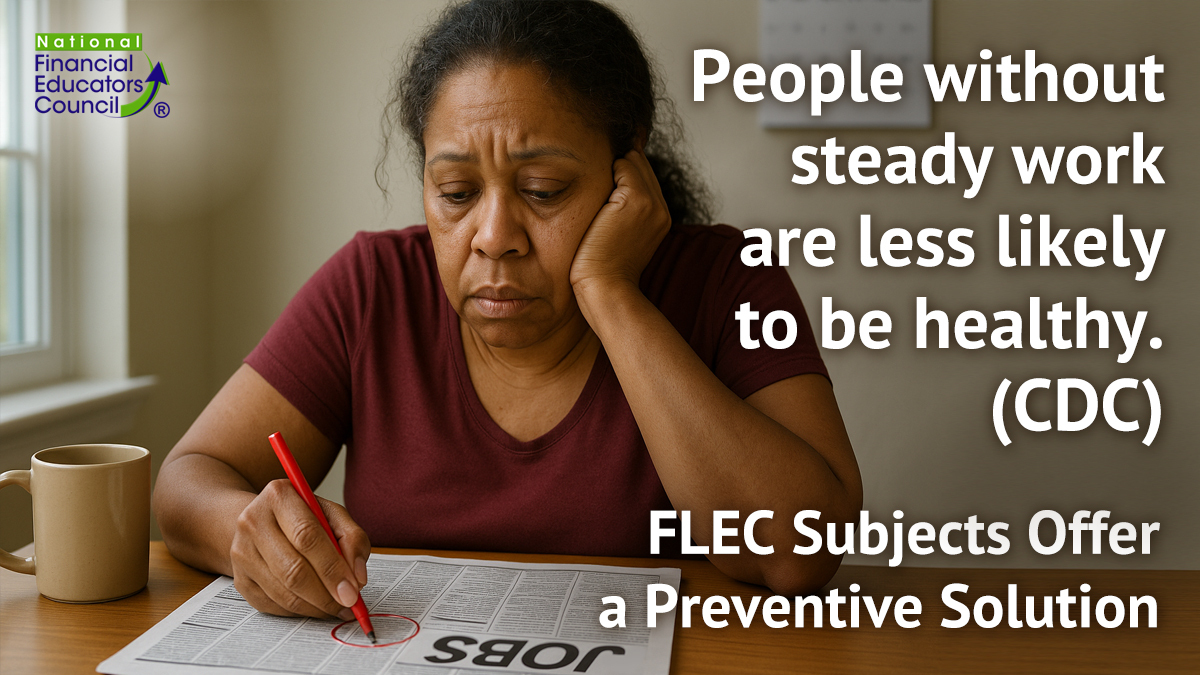
Financial Literacy as Preventive Public Health Strategy
The National Financial Educators Council defines financial literacy as:
“When an individual possesses the skills and knowledge about financial matters to confidently take effective action so they are able to afford their goals, lifestyle, and aspirations.”
This definition reflects resilience, stability, and reduced chronic stress.
Financial literacy improves:
Decision-making confidence
Debt management
Savings behavior
Long-term planning
Economic mobility
When implemented early and reinforced throughout life stages, financial education reduces long-term strain on the system.
The Policy Case for Declaring Financial Instability a Public Health Emergency
Declaring financial instability a Public Health Emergency (PHE) would:
Mobilize federal and state funding streams
Encourage cross-agency collaboration
Integrate financial capability services into public health infrastructure
Establish data tracking and measurable outcomes
Expand access to preventive financial education
Public health emergencies require coordinated response structures. Financial instability meets that threshold.
The cost of inaction includes escalating healthcare spending and productivity losses. Preventive action is more cost-effective than reactive crisis management. Preventive financial education should be treated similarly to preventive healthcare.
A Systems-Level Framework for Organizational Action
Organizations can put this into action through:
1. Early Financial Education in Schools
Embedding structured financial literacy curricula within K–12 education ensures students enter adulthood prepared to manage credit, debt, savings, and income responsibly.
2. Financial Counseling for Adults in Crisis
Integrating financial counseling services within workforce programs, healthcare systems, and nonprofit organizations stabilizes individuals during economic disruption.
3. Cross-Sector Partnerships
Collaboration between public health agencies, educational institutions, employers, and nonprofit organizations strengthens community-wide financial resilience.
4. Evidence-Based Financial Education Policy
Programs grounded in national standards and measurable outcomes ensure scalability and credibility.
Financial capability services must be treated as infrastructure — not supplemental programming.
From Individual Responsibility to Systems Responsibility
For decades, financial instability has been framed as a personal responsibility issue.
The CDC’s Social Determinants of Health framework makes clear that financial conditions are structural drivers of health.
Financial instability is chronic.
It is pervasive.
It is measurable.
And it is preventable.
Declaring financial instability a public health emergency reframes the issue appropriately — from individual failure to systemic intervention.
The Bottom Line: The Path Forward
Financial instability is chronic, systemic, and preventable. It is a primary driver of poor health outcomes, widening health disparities, workforce disruption, and long-term economic inequality. Organizations that integrate financial literacy, financial education, and financial counseling into their service models position themselves at the forefront of preventive public health innovation and health equity advancement.
By aligning financial education and capability services with the Centers for Disease Control and Prevention's Social Determinants of Health framework, leaders can:
Reduce preventable health risks linked to economic distress
Improve measurable physical and mental health outcomes
Strengthen workforce participation and economic mobility
Build financially resilient families and communities
Lower long-term public healthcare and social service expenditures
Recognizing financial instability as a Public Health Emergency (PHE) would accelerate cross-sector collaboration, unlock sustainable funding mechanisms, and formally integrate financial capability into the national public health strategy. Policymakers, healthcare systems, educational institutions, and nonprofit leaders must act now to elevate stability as a core public health priority.
The health, economic stability, and long-term prosperity of our communities depend on it.

This free case study video walks you through a real-world framework used with a community organization.
Discover:
How our proven 3-step framework creates lasting results
Real participant turning points as they moved from fear to confidence and action
The measurable impact organizations can achieve with the right financial literacy programming
How we can customize the program and outcomes to fit your community's unique needs
The data-driven measurements of your program impact that you can share with your stakeholders to scale your program
Request Access to the Free Case Study Video

Smart Money Changes Everything is a financial education blog and website. The information presented in this post is solely for your general financial education and is not to be considered financial advice. Always check with your trusted financial professionals who will consider your unique situation and goals to develop your personalized comprehensive plan.

