
Beyond Candy: 6 Ways Organizations Can Turn Halloween Into Financial Literacy
Halloween is usually associated with costumes, candy, and a little harmless mischief.
But for organizations that serve children and families, Halloween can also be something else: an opportunity to make financial literacy practical, relevant, and fun.
Financial education doesn't always have to look like a traditional lesson. In fact, some of the most effective learning happens when financial concepts are connected to experiences young people already understand.
Halloween provides plenty of those connections.
For libraries, schools, nonprofits, youth-serving organizations, and community programs, seasonal events can become an unexpected entry point for conversations about earning, spending, saving, decision-making, and opportunity cost.
Here are six ways organizations can turn Halloween into a financial literacy experience.
1. Create a Halloween Budget Challenge
Give students a hypothetical Halloween budget and let them decide how to spend it.
For example:
You have $50 to prepare for Halloween. You need a costume, decorations, and a treat to share. How will you spend your money?
Provide several options at different prices.
A student might choose:
A $25 costume
$10 in decorations
$8 in treats
$7 left over for savings
Another might decide to make a costume instead, spending less and saving more.
The goal isn't to find one "right" answer.
It's to get students thinking about trade-offs and priorities.
This simple activity introduces a financial concept young people will encounter repeatedly throughout life: when you spend money on one thing, you may have less available for something else.
For organizations, it's also an easy activity to incorporate into an existing Halloween program without requiring a separate financial literacy class.

2. Turn Candy Into a Lesson About Choices
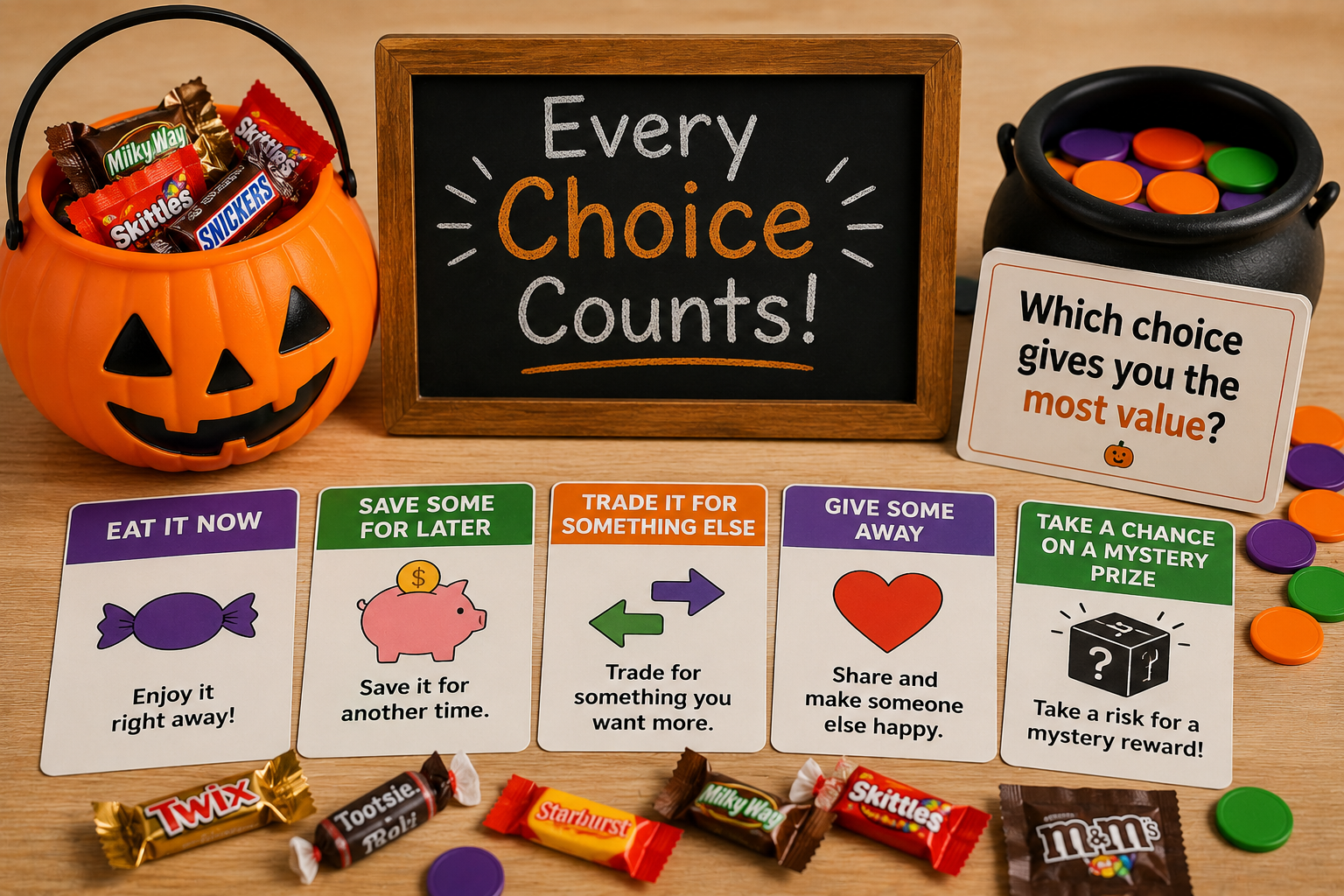
Give participants a set number of pieces of candy—or use pretend candy, tokens, or points—and create different choices.
For example:
Eat it now.
Save some for later.
Trade it for something else.
Give some away.
Take a chance on a mystery prize.
Then ask:
"Which choice gives you the most value?"
The interesting part is that the answer isn't necessarily the same for everyone.
This opens the door to conversations about needs versus wants, delayed gratification, sharing, and decision-making.
The lesson isn't really about candy.
It's about helping young people understand that financial decisions are choices, and choices have consequences.
3. Introduce Opportunity Cost Through Costume Decisions
Halloween costumes are a natural way to explain opportunity cost—the value of what you give up when you choose something else.
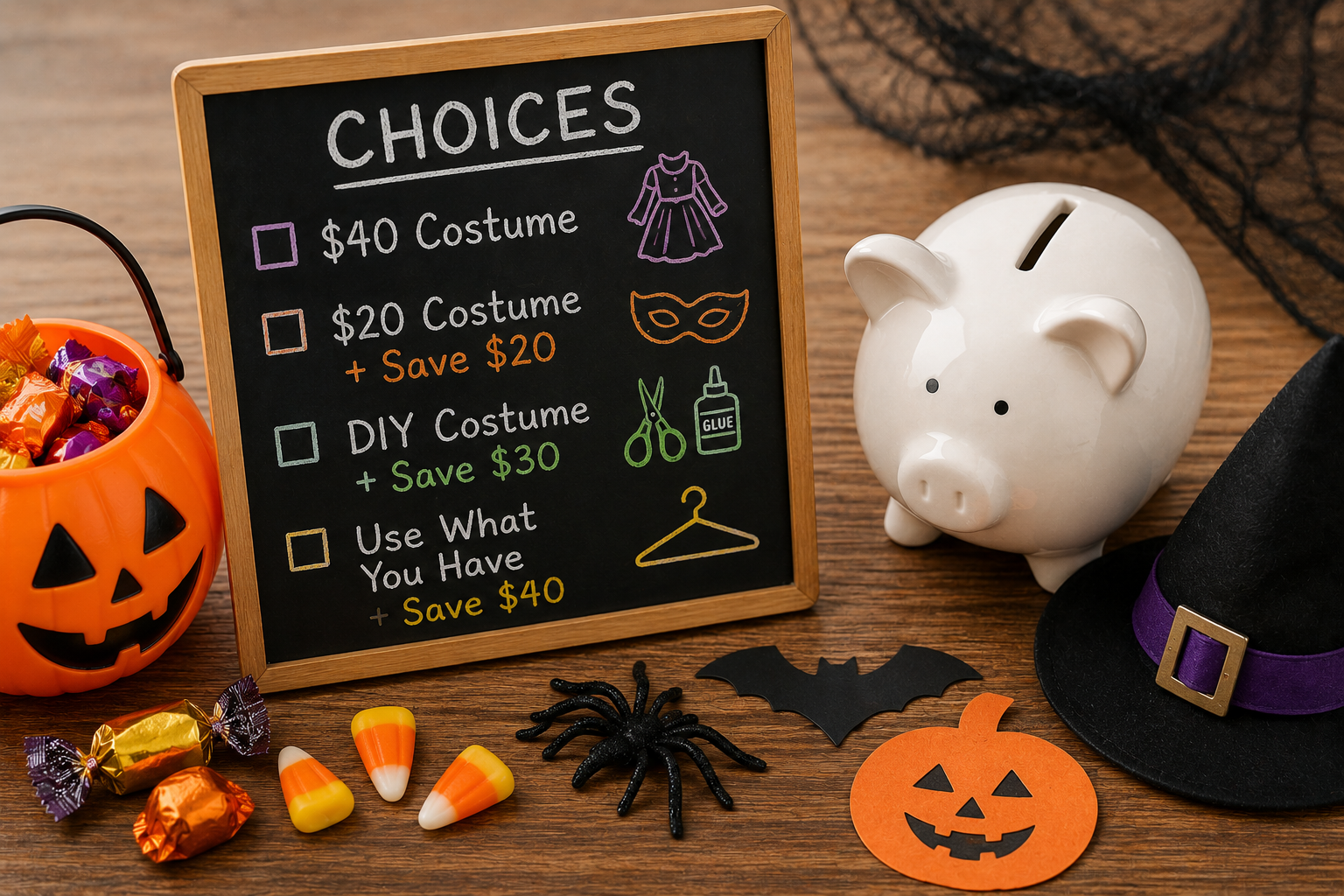
Suppose a student has $40.
They could:
Buy a $40 costume.
Buy a $20 costume and save $20.
Spend $10 making a costume and save $30.
Use items they already own and save the entire $40.
Ask:
"What are you giving up with each choice?"
This turns an abstract financial concept into something students can immediately understand.
And once they understand opportunity cost in a familiar situation, organizations can connect it to bigger decisions:
What happens when you're deciding between spending $500 on something today or saving it for a future goal?
That is where financial literacy starts moving beyond vocabulary and into real-world decision-making.
4. Build a "Trick-or-Treat Economics" Game
Trick-or-treating can become a surprisingly effective lesson in economics.
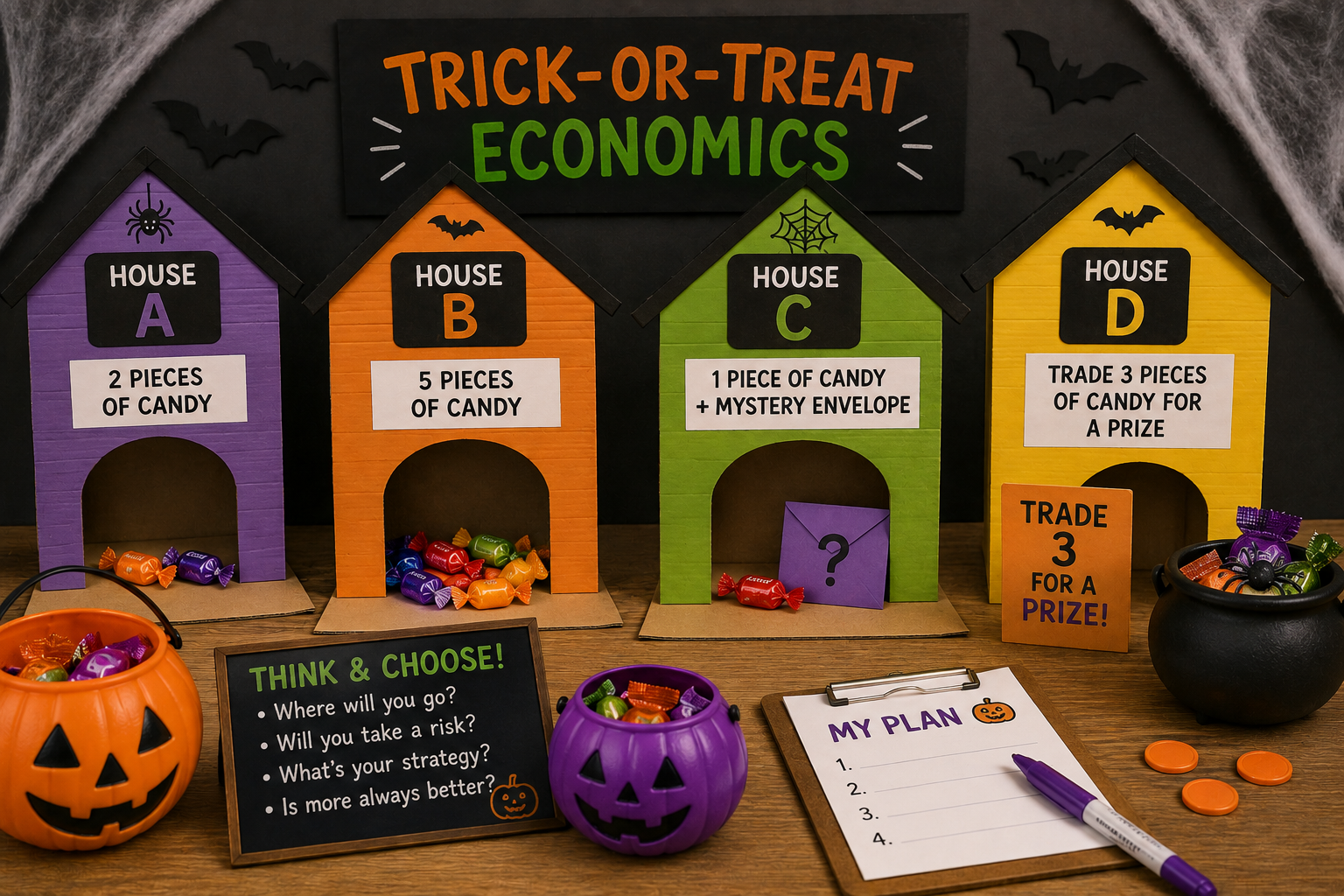
Create different "houses" or stations, each offering a different reward.
For example:
House A: 2 pieces of candy
House B: 5 pieces of candy
House C: 1 piece of candy + a mystery envelope
House D: Trade 3 pieces of candy for a prize
Participants have to decide where to go and whether to take certain risks.
Afterward, ask:
Why did you make that choice?
Did you choose certainty or take a risk?
Did your strategy change?
Was the biggest reward always the best choice?
This creates an opportunity to introduce concepts such as risk, reward, scarcity, and decision-making.
For libraries and community organizations, this type of game can be especially valuable because it transforms financial literacy from something students are told about into something they experience.
5. Challenge Students to Create a Halloween Business
What if trick-or-treating wasn't the only way to participate in Halloween?
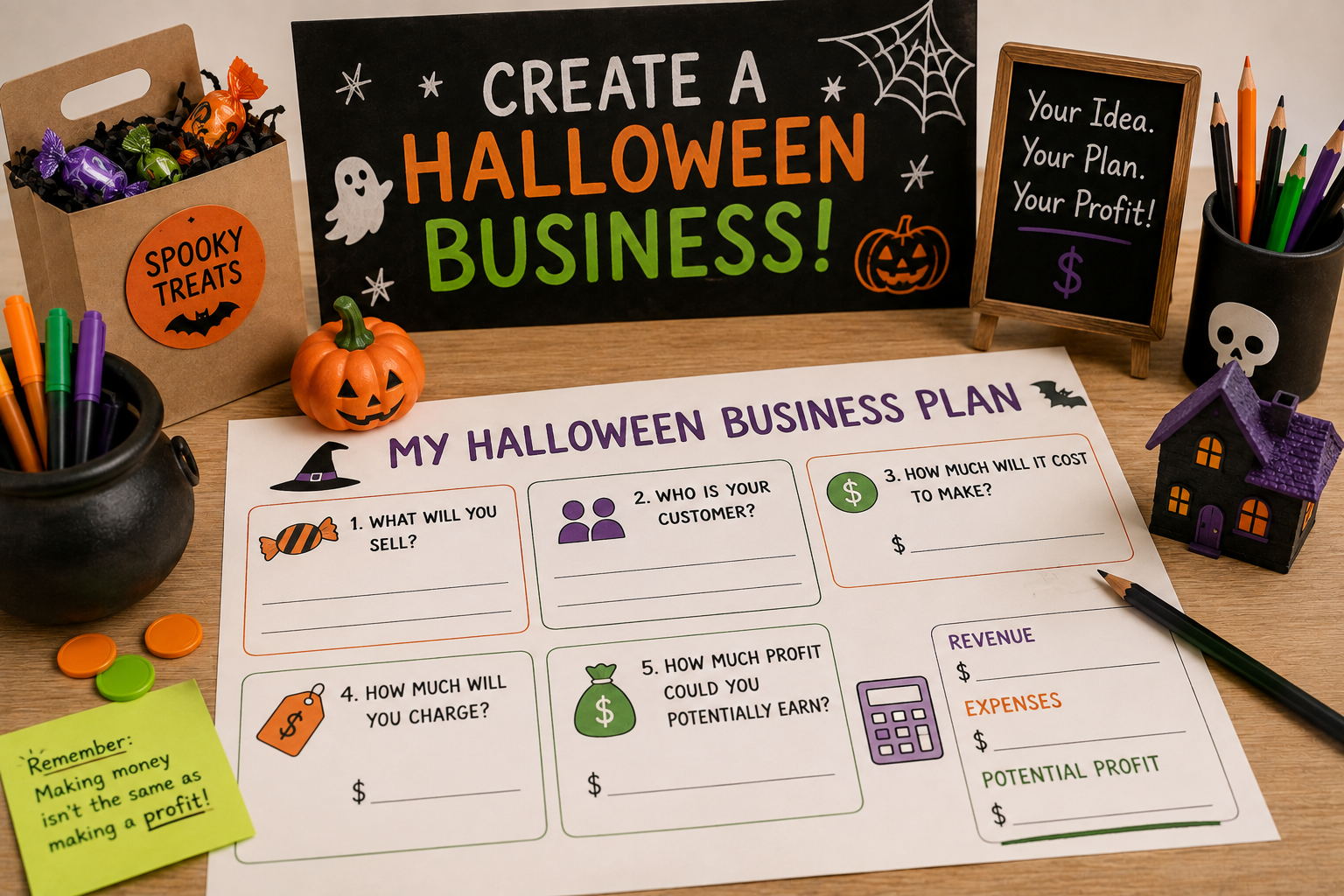
Challenge students to design a small Halloween-themed business.
They might create:
Halloween treat bags
Custom decorations
Face-painting services
Handmade crafts
Costume accessories
A haunted-house experience
Then give them a simple set of questions:
What will you sell?
Who is your customer?
How much will it cost to make?
How much will you charge?
How much profit could you potentially earn?
Suddenly, students are practicing revenue, expenses, pricing, profit, and entrepreneurship.
The activity can also introduce an important distinction:
Making money isn't the same as making a profit.
That is a lesson worth learning early.
6. Turn Halloween Spending Into a Bigger Conversation
Perhaps the most powerful opportunity isn't the Halloween activity itself.
It's the conversation that comes afterward.
Ask students:
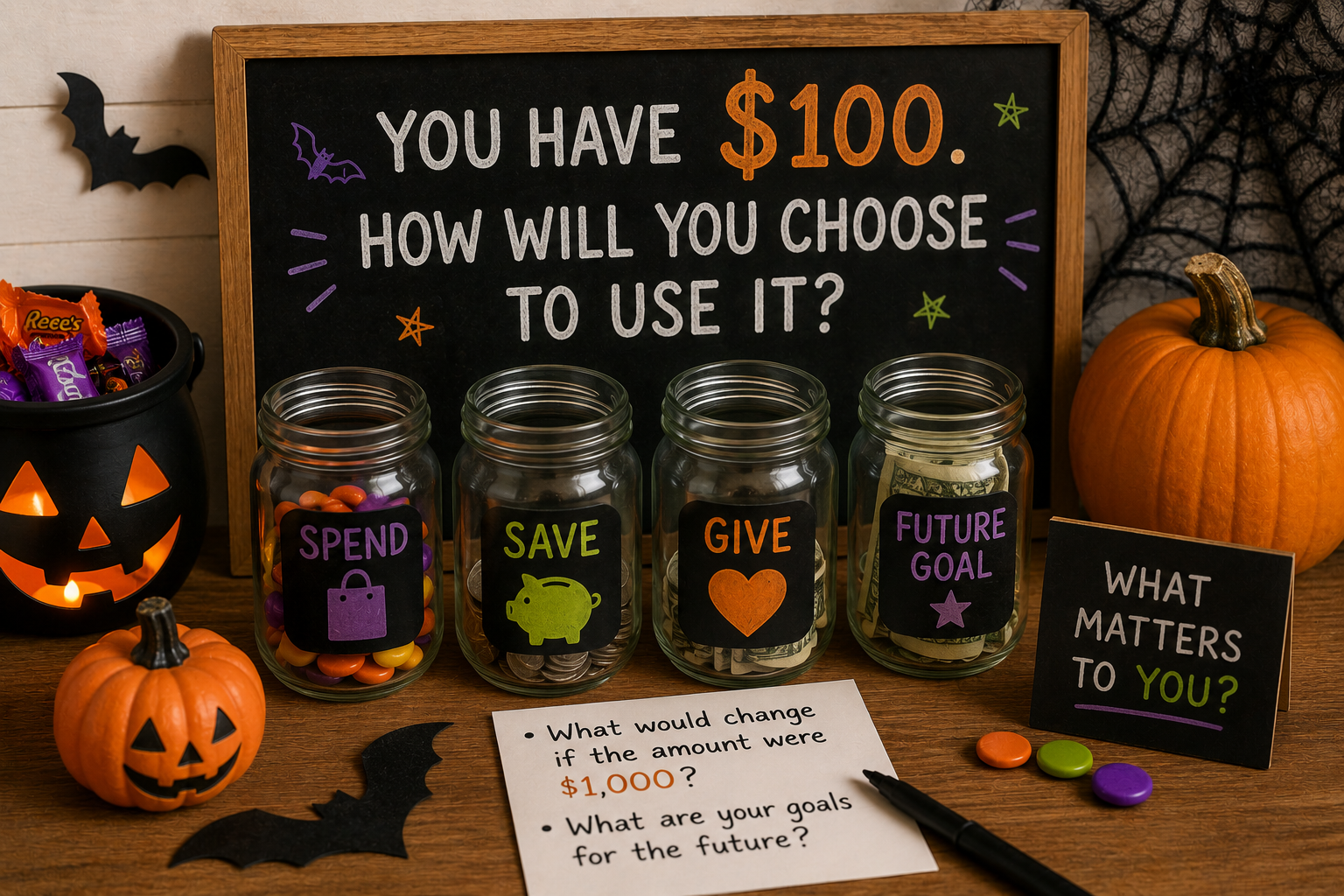
"If you had an extra $100, what would you do with it?"
Then challenge them to divide the money among:
Spending
Saving
Giving
A future goal
There doesn't have to be one correct allocation.
The purpose is to help young people begin thinking intentionally about what money means to them and how their choices connect to their goals.
Organizations can take that conversation one step further by asking:
"What would change if the amount were $1,000?"
Now students are thinking beyond Halloween.
They're beginning to practice the same decision-making skills they will eventually use when managing an allowance, earning their first paycheck, purchasing a car, paying for college, or establishing an emergency fund.
Seasonal Programming Can Become Financial Education Programming
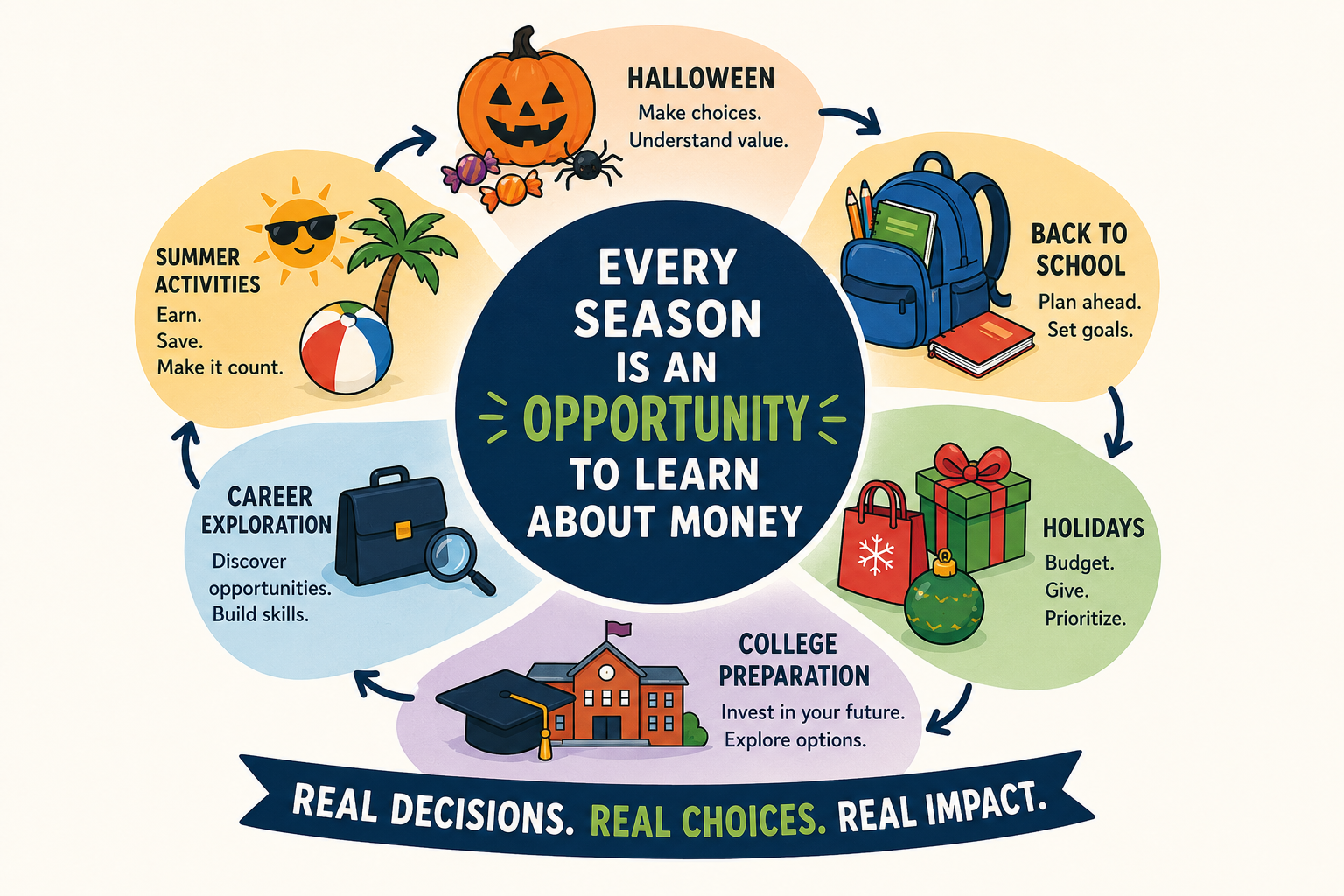
For organizations serving young people, financial literacy doesn't necessarily require creating an entirely new event.
It can be incorporated into existing programming.
Halloween.
Back-to-school season.
The holidays.
Summer activities.
College preparation.
Career exploration.
Each provides a context for connecting financial concepts to situations young people already understand.
The key is moving beyond simply talking about money.
Give young people opportunities to make decisions, evaluate trade-offs, solve problems, and see the consequences of their choices.
That's where financial education becomes more than information.
It becomes practice.
The Bottom Line: Bigger Opportunity
Halloween may only happen once a year.
But the financial decisions young people learn to make will follow them for decades.
For libraries, schools, nonprofits, and other youth-serving organizations, seasonal programming can be more than entertainment. It can be a strategic opportunity to introduce financial concepts in ways that are memorable, accessible, and relevant.
Because sometimes the best financial literacy lesson isn't sitting in a workbook.
Sometimes it's hiding in a pile of candy.
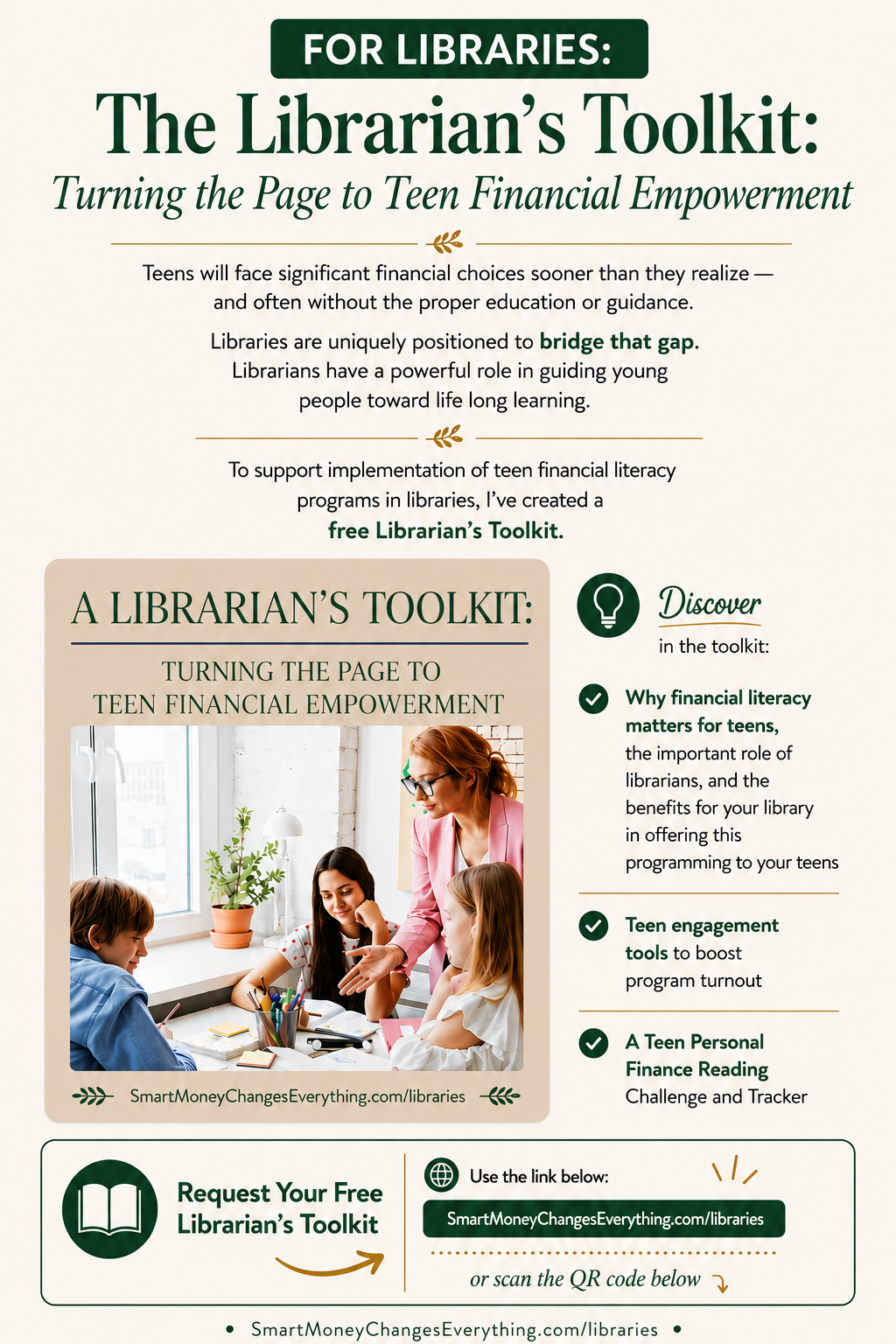
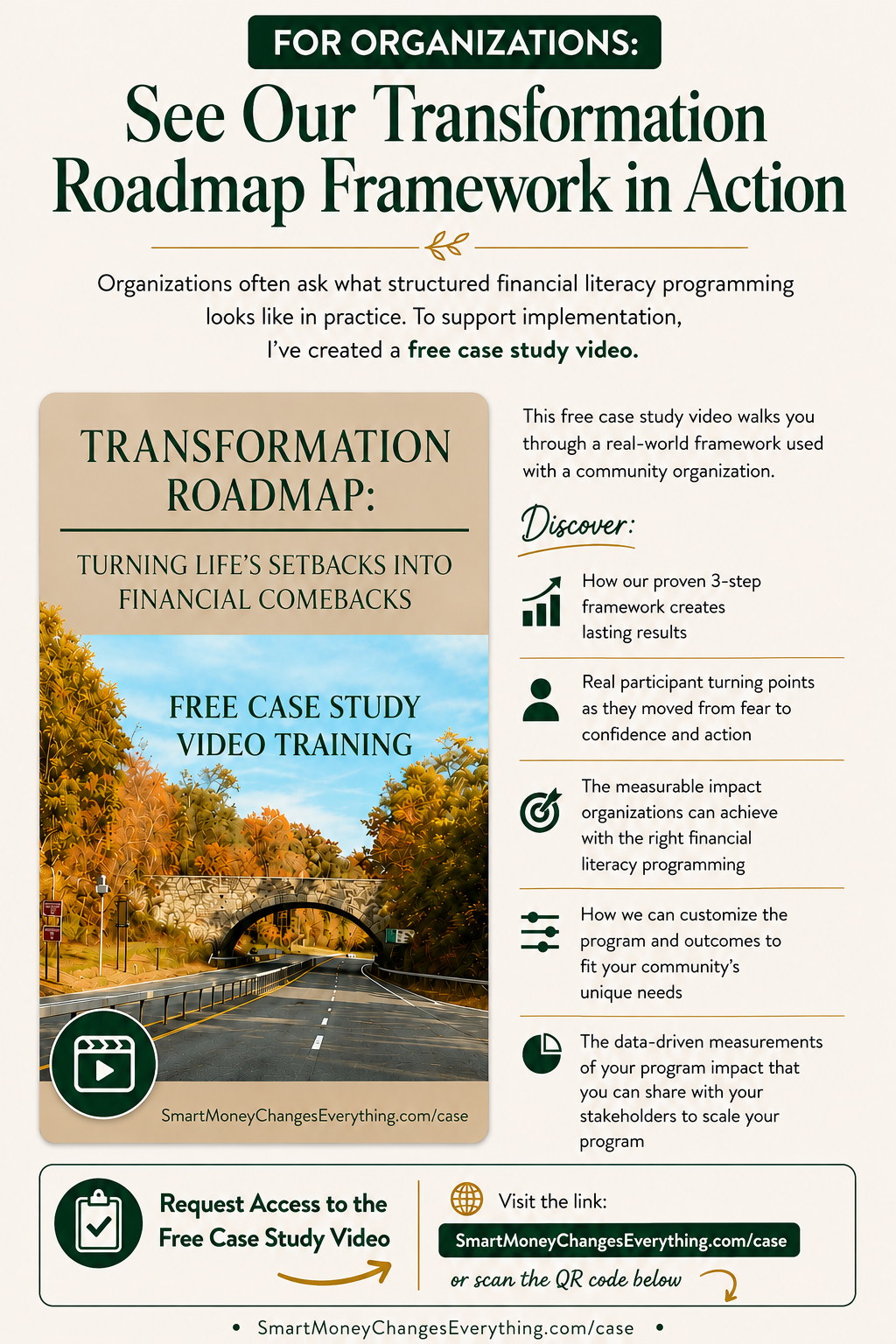
REQUEST THESE FREE RESOURCES CREATED FOR YOU :

REQUEST THESE FREE RESOURCES:

Smart Money Changes Everything is strictly a financial education website. The information presented in this post is solely for your general financial education and is not to be considered financial advice. Always check with your trusted financial professional team who will consider your unique situation and goals to develop your own personalized comprehensive financial plan.

